
Agriculture has changed significantly over the last few decades. Farmers today are expected to produce higher yields while using less water, reducing labour costs, and managing weeds more efficiently. One of the simplest technologies that helps achieve these goals is mulch film.
Although mulch film is widely used in vegetable farming, fruit cultivation, and commercial horticulture, many growers are still unsure about how it works or which type is best for their crops. Understanding the purpose of mulch film helps farmers choose the right solution for their growing conditions and crop cycle.
What Is Mulch Film?
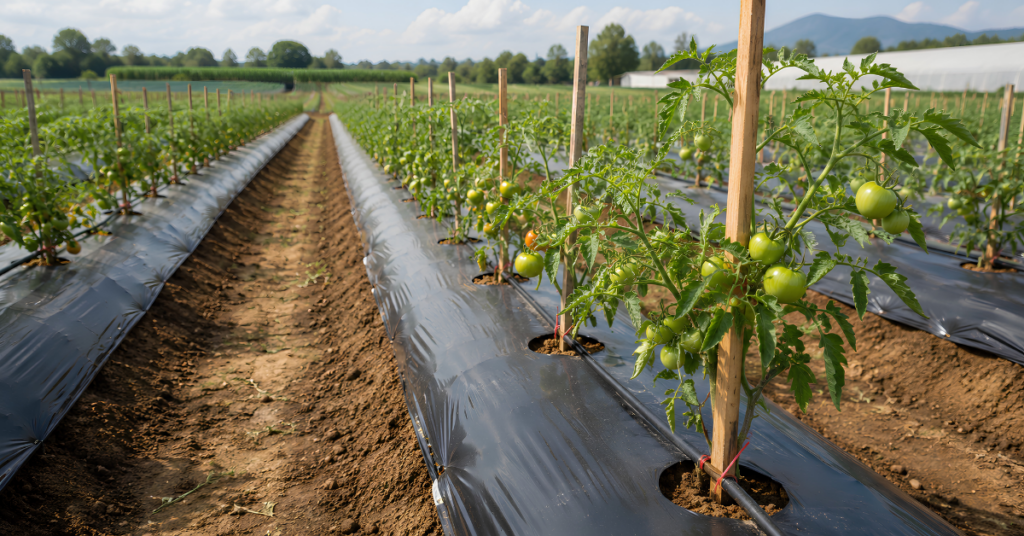
Mulch film is a thin protective sheet placed over the soil surface before planting. Small planting holes are created so crops can grow while the remaining soil stays covered throughout the growing season.
Unlike traditional mulching materials such as straw or dry leaves, mulch film forms a continuous barrier that helps retain moisture, suppress weed growth, and regulate soil temperature.
Today, mulch film is widely used in commercial farming because it improves crop management while reducing the amount of manual labour required during cultivation.
Why Farmers Use Mulch Film
Every farming season presents different challenges. Weed growth competes with crops for nutrients, water evaporates quickly during hot weather, and changing soil temperatures can affect root development.
Mulch film addresses several of these problems at the same time.
Instead of leaving soil exposed, farmers cover planting beds with mulch film to create a more stable growing environment. This allows crops to establish stronger root systems while reducing unnecessary water loss.
How Mulch Film Works
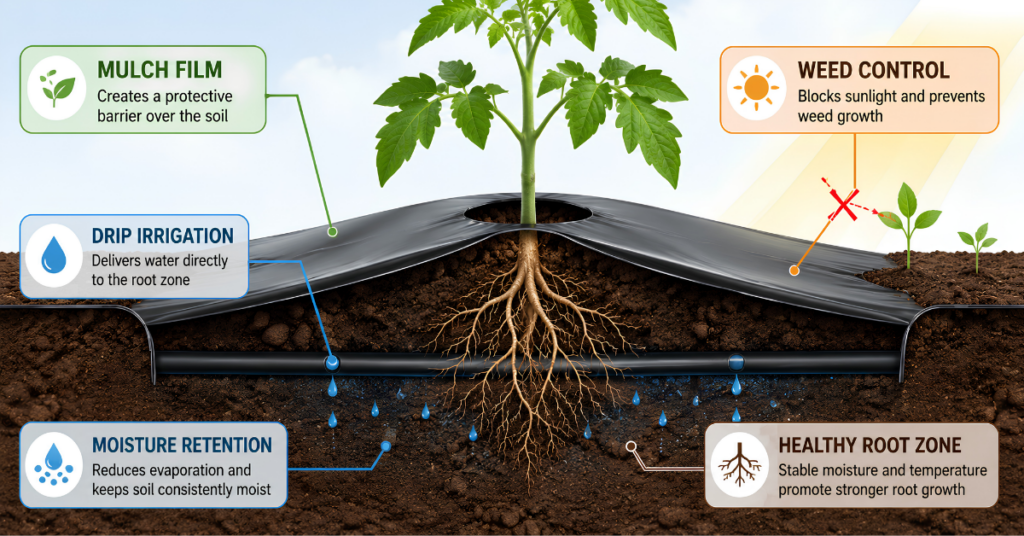
Once installed, mulch film creates a protective layer between the soil and the outside environment.
The film reduces direct sunlight reaching the soil surface, making it difficult for many weeds to grow. At the same time, water applied through drip irrigation remains close to the root zone instead of evaporating quickly.
The covered soil also experiences fewer temperature fluctuations, creating more stable conditions for plant growth throughout the season.
Types of Mulch Film
Different farming conditions require different types of mulch film. The choice depends on crop type, climate, and farming objectives.
| Mulch Film Type | Best For | Key Characteristic |
|---|---|---|
| Black Mulch Film | Vegetable crops | Excellent weed control |
| Silver Black Mulch Film | Hot climates | Weed control with insect deterrence |
| White Mulch Film | Warm regions | Helps reduce soil temperature |
| Transparent Mulch Film | Early crop establishment | Faster soil warming |
| Biodegradable Mulch Film | Sustainable farming | Naturally decomposes after crop harvest |
For growers looking to reduce plastic waste and eliminate post-harvest film collection, Biodegradable Mulch Film can be a practical alternative to conventional plastic mulch while delivering similar field performance.
Where Mulch Film Is Commonly Used
Mulch film has become standard practice in many high-value crops because of its ability to improve growing conditions.
It is commonly used for:
- Tomato
- Chilli
- Capsicum
- Cucumber
- Watermelon
- Muskmelon
- Strawberry
- Brinjal
- Onion
- Cabbage
- Cauliflower
Many commercial farms also combine mulch film with drip irrigation systems to improve irrigation efficiency.
Benefits of Using Mulch Film
The advantages of mulch film go beyond simply covering the soil.
Proper installation can help improve water management, reduce weed pressure, and create a cleaner growing environment around the crop.
Some of the most noticeable benefits include:
- Better soil moisture retention
- Reduced weed growth
- Lower irrigation requirements
- Cleaner fruits and vegetables
- Improved soil temperature management
- Reduced soil erosion
- Better crop uniformity
- Lower maintenance during the growing season
The exact results depend on crop type, climate, irrigation method, and overall farm management.
Plastic Mulch Film vs Biodegradable Mulch Film
Both materials are designed to improve crop production, but they differ in what happens after harvest.
| Feature | Plastic Mulch Film | Biodegradable Mulch Film |
| Weed Control | Excellent | Excellent |
| Moisture Conservation | Excellent | Excellent |
| Soil Temperature Management | Excellent | Excellent |
| Removal After Harvest | Required | Not Required |
| Plastic Waste | Remains after use | Designed to decompose under suitable conditions |
| Labour Requirement | Higher | Lower |
As more farms focus on sustainable agricultural practices, biodegradable alternatives are becoming increasingly popular because they reduce the need for collecting and disposing of used plastic film.
Choosing the Right Mulch Film
Selecting the right mulch film depends on several practical factors rather than choosing the same material for every farm.
Consider:
- Crop duration
- Local climate
- Irrigation method
- Soil type
- Required film thickness
- Colour selection
- Harvest period
- Sustainability goals
A short-season vegetable crop may require a different mulch film than a long-duration fruit crop, making proper selection an important part of farm planning.
The Future of Mulch Film
Modern agriculture is gradually moving toward farming practices that reduce waste while maintaining productivity.
As environmental regulations become stricter and labour costs continue to rise, many growers are exploring solutions that simplify field operations without compromising crop performance.
This shift has increased interest in biodegradable mulch films that can provide the benefits of conventional mulching while helping reduce plastic waste after harvest.
Conclusion
Mulch film has become an essential part of modern agriculture because it helps farmers manage weeds, conserve soil moisture, and create more favourable growing conditions throughout the crop cycle.
While conventional plastic mulch continues to be widely used, many growers are now evaluating biodegradable alternatives that eliminate post-harvest collection and support more sustainable farming practices.
Understanding the different types of mulch film and choosing the right option for each crop can improve both field management and long-term productivity.